We all know the late-May routine in the Florida Panhandle. You check the flashlight batteries, stock up on bottled water, and keep a close eye on the weather channel. But while you’re securing your patio furniture and checking your windows, there is one major, expensive asset sitting completely exposed in your yard: your outdoor air conditioner.
In Escambia and Santa Rosa counties, our tropical storms aren’t just a threat to your roof; they are a direct threat to your home comfort system. Between flying debris, torrential downpours, and massive power surges, a single storm can easily destroy a perfectly good HVAC system.
At White Sands Cooling and Heating, we want to ensure your home remains a safe sanctuary all summer long. Here is your essential checklist for AC hurricane prep in Pensacola to protect your investment before the first storm system spins up in the Gulf.
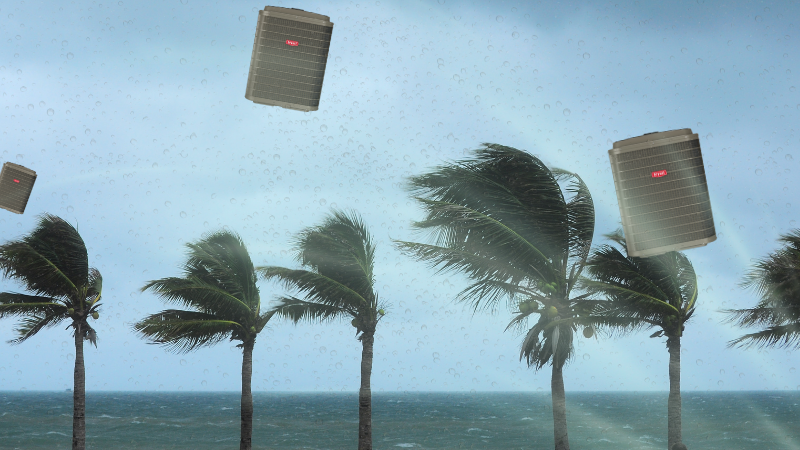
Florida building codes are strict for a reason. Your outdoor condenser unit must be securely anchored to a concrete or composite pad to prevent it from shifting, or completely blowing away in high winds.
Wind doesn’t usually break an AC unit; flying objects do. Your outdoor unit has a delicate aluminum coil matrix that can be crushed easily by flying debris.
One of the most common mistakes homeowners make is leaving their AC running through a tropical storm.
When a hurricane or severe tropical storm rolls through our area, the power grid fluctuates wildly. You will experience rapid “on-off-on” power cycling, brownouts, and massive voltage spikes as transformers blow down the street.
Once the storm passes and the power returns, your first instinct will be to flip the AC back on to get the humidity out of the house. Wait before you restore power to your system, do a quick visual inspection of the outdoor unit:
If anything looks bent, flooded, or shifted, keep the power off and call a professional. Running a structurally damaged or waterlogged system can instantly destroy the compressor.
The best time to prepare for a storm is when the skies are clear. As part of our 50+ Point Health Report, our technicians check your unit’s physical stability, electrical connections, and surge protection devices to ensure your system is hardened against the elements.
Don’t wait until a tropical storm warning is issued and our phone lines are flooded. Let’s make sure your system is ready for whatever the 2026 season throws at us.
Ensure your family’s peace of mind this summer. Call White Sands Cooling and Heating today at (850) 932-9800 to schedule your pre-season system check!

Warning: Our online payment system will accept payment for invoices for other companies. In fact, there is an electrical company in our area named "White Sands Electric." We are "White Sands Cooling & Heating" and are a completely separate, unrelated entity. By clicking the "Proceed to Payment" button below, you acknowledge that you are making a payment to "White Sands Cooling & Heating." Errors will result in a processing fee.